| Property | Lab Grown | Mined Grown | Description |
|---|---|---|---|
| Chemical Composition | Carbon | Carbon | Both lab-grown and mined diamonds are composed of pure carbon. |
| Crystalline Structure | Cubic | Cubic | Both types have the same cubic crystalline structure. |
| Refractive Index | 2.42 | 2.42 | The measure of how light bends within the diamond is identical in both types. |
| Dispersion | 0.044 | 0.044 | Both have the same dispersion, which affects the fire or color seen in the diamond. |
| Hardness | 10 | 10 | Both lab-grown and mined diamonds have a hardness of 10 on the Mohs scale, the highest possible. |
| Density | 3.52 | 3.52 | The density, or mass per unit volume, is the same for both. |
| Color | Controlled in lab | Natural factors | Color can be influenced in lab-grown diamonds; natural diamonds vary based on geological factors. |
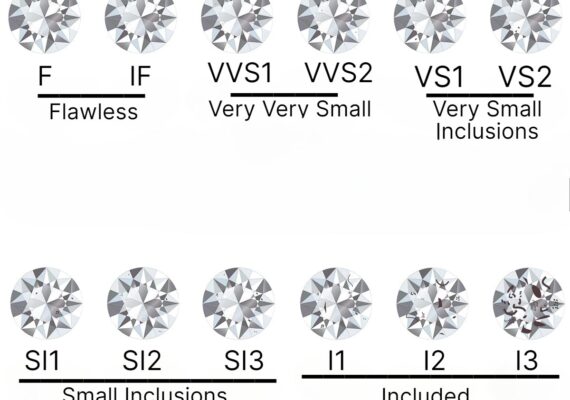
| Inclusions | Possible (controlled) | Possible (natural) | Inclusions are possible in both but can be minimized in lab-grown diamonds. |
| Fluorescence | Possible | Possible | Both types may exhibit fluorescence under UV light. |
| Origin | Laboratory | Earth | Lab-grown diamonds are created in a lab, while mined diamonds are extracted from the earth. |
| Environmental Impact | Lower | Higher | Lab-grown diamonds typically have a lower environmental impact than mined ones. |